Health and Safety Policy for Landscaping Brixton
 This health and safety policy sets out the standards expected across all landscaping activities carried out in Brixton. It applies to planning, preparation, maintenance, planting, clearance, soft landscaping, hard landscaping, and the use of tools and equipment on every site. Our aim is to protect workers, clients, visitors, and members of the public by maintaining a safe working environment and by managing risks before work begins.
We recognise that landscaping work can involve manual handling, sharp tools, machinery, uneven ground, changing weather, and interaction with the public. For that reason, every landscaping project must be approached with care, organisation, and clear responsibility. Safe methods of work are not optional; they are central to how landscape services are delivered.
 All staff and contractors are expected to follow this policy at all times. Supervisors must ensure that work is carried out in a controlled manner and that good housekeeping is maintained throughout the site. Walkways, storage areas, and work zones should remain tidy, with debris, cables, and waste removed promptly to reduce the risk of slips, trips, and falls.
Risk assessments must be completed before work starts and reviewed whenever the task, equipment, or site conditions change. These assessments should consider the condition of the ground, access routes, overhead hazards, nearby structures, weather exposure, and the presence of vulnerable persons such as pedestrians or residents. A suitable method statement should then be used to ensure the task is performed safely and consistently.
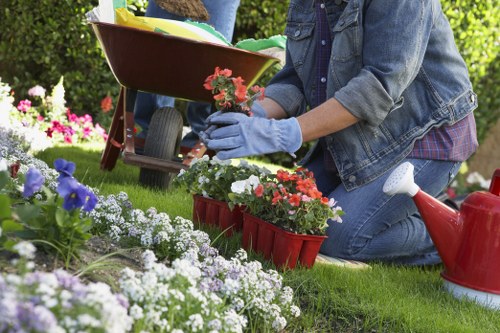
Each landscaping team must use appropriate personal protective equipment, including gloves, safety footwear, high-visibility clothing, hearing protection, eye protection, and respiratory protection where required. PPE must be selected for the task and kept in good condition. Faulty or unsuitable equipment must not be used, and any damage should be reported immediately so it can be replaced without delay.
 Tools and machinery must be inspected before use and maintained according to manufacturer instructions. Only trained and authorised persons may operate equipment such as hedge trimmers, mowers, cutting tools, compactors, or other powered machinery. Guards, safety features, and emergency controls must never be removed or bypassed. Safe isolation procedures must be followed during cleaning, adjustment, storage, and transport.
Manual handling is a key concern in landscaping work, particularly when moving soil, plants, paving, timber, or waste materials. Loads should be assessed before lifting, and mechanical aids should be used wherever practical. Team lifting may be required for heavier or awkward items. Staff must avoid unnecessary strain by using correct posture, planning the route in advance, and taking regular breaks when needed.
Weather conditions can affect safety significantly. Hot weather may create risks from dehydration and sun exposure, while cold, wet, or windy conditions can increase the chance of slips, reduced visibility, and fatigue. Work should be adapted to suit the conditions, with suitable clothing, drinking water, rest periods, and pauses in severe weather where necessary. Safe decisions must always take priority over speed.
When working near roads, footpaths, entrances, or occupied properties, extra care must be taken to protect the public. Barriers, signage, and temporary controls should be used where needed to keep people away from active work areas. Noise, dust, and flying debris should be minimised through careful technique and the correct use of equipment. The site must be left secure and orderly at the end of each shift.
Training and supervision are essential parts of this policy. Every worker must receive appropriate instruction for the tasks they perform, including the safe use of tools, manual handling, emergency procedures, and site-specific controls. New starters and less experienced workers should be supervised closely until they demonstrate competence. Ongoing refreshers may be arranged to reinforce safe habits and maintain high standards.
Accidents, near misses, dangerous occurrences, and equipment defects must be reported as soon as possible so that corrective action can be taken. Prompt reporting helps identify patterns, prevent repeat incidents, and improve working practices. Records should be kept where appropriate, and investigations should focus on learning and prevention rather than blame.
 Emergency arrangements must be clear to everyone on site. Workers should know how to respond to injury, fire, severe weather, chemical exposure, or other urgent situations. First aid supplies should be available where required, and the names of trained first aiders should be known to the team. If an area becomes unsafe, work must stop until the risk has been controlled.
Materials such as fuels, oils, fertilisers, herbicides, and cleaning products must be stored, handled, and disposed of safely. Labels and safety information should be followed at all times, and containers must be kept secure to prevent spills or contamination. Environmental responsibility is also part of safe landscaping practice, so waste should be separated and removed in line with applicable procedures.
In addition, all workers are expected to remain alert to the changing nature of outdoor work. Ground conditions may be unstable, plants and branches may conceal hazards, and hidden services may be present beneath the surface. A careful approach, combined with communication and teamwork, helps prevent incidents and supports reliable service delivery.
 This policy will be reviewed regularly to ensure it remains effective, practical, and aligned with safe working standards. By following these requirements, landscaping operations can be carried out responsibly, with respect for people, property, and the working environment. Every person involved in landscaping Brixton has a part to play in maintaining a safe and professional workplace.