Soft landscaping in Brixton: creating outdoor spaces that suit local homes, gardens, and businesses
Soft landscaping can completely change how an outdoor space feels and functions. In Brixton, where homes range from Victorian terraces and converted flats to newer developments and busy commercial premises, the right planting, turfing, borders, and finishing touches can make even a compact plot feel welcoming, practical, and well cared for. Whether you want a front garden that looks tidy year-round, a rear courtyard that feels greener and more private, or a commercial frontage that makes a better first impression, soft landscaping in Brixton offers a flexible way to improve your property without the disruption of heavy construction work.
Local customers often look for solutions that work with the character of the area rather than against it. Brixton gardens can be shaded by neighbouring buildings, exposed to traffic and footfall, or squeezed into narrow access routes where every bag of soil and every wheelbarrow load has to be planned carefully. That is why choosing a local team matters: it helps ensure the planting scheme, lawn choice, soil preparation, and layout are suited to real conditions, not just to a brochure image. If you are considering a refresh for your outdoor space, soft landscaping in Brixton can be tailored to your property, your use of the space, and the practical realities of living and working locally.
From planting and turfing to soil improvement, mulching, and garden bed preparation, soft landscaping is about building an outdoor space that grows well and is easy to maintain. It can be as simple as lifting tired turf and laying fresh lawn, or as detailed as reshaping borders, adding evergreen structure, and choosing low-maintenance planting that thrives in urban conditions. If you are ready to improve your garden, yard, or commercial space, contact us today to discuss your ideas and request a free quote.
What soft landscaping includes

Soft landscaping refers to the living, natural, and soil-based parts of a garden or outdoor area. It is the counterpart to hard landscaping, which covers paving, walls, decking, fencing, and other built elements. Soft landscaping focuses on the features that bring colour, texture, privacy, and seasonal change to a space. In Brixton, that often means working in smaller gardens, shared outdoor areas, and spaces that need to look good without requiring constant upkeep.
Typical soft landscaping services can include lawn installation, planting design and planting-up, border creation, hedge planting, soil preparation, mulching, weed suppression, and the reshaping of garden beds. Some projects also involve clearing neglected areas and restoring them so they can support healthy plants or a new lawn. Good groundwork is essential because strong planting begins below the surface: the right soil structure, drainage, and nutrient balance can make a noticeable difference to how well the garden performs.
For residential customers, this might mean making a family garden more usable, adding a low-maintenance border, or creating a more private feel in a terraced property. For commercial clients, it may involve tidy planting at the front of a shop, office, café, nursery, school, or managed property. The aim is always the same: to make the space better suited to how it is used every day.
Common soft landscaping elements
Depending on the site and your preferences, your project may include some or all of the following:
- Fresh turf laid on prepared ground
- New flower beds or shrub borders
- Seasonal or evergreen planting schemes
- Soil enrichment, composting, and topsoil improvements
- Mulch to help retain moisture and reduce weeds
- Hedge planting or boundary softening
- Edging to keep borders tidy and defined
- Reworking tired planting areas for better shape and structure
Why Brixton properties benefit from a tailored approach

Brixton is a lively, densely built part of South London, and that creates both opportunities and challenges for landscaping. Many properties have compact outdoor spaces that need careful planning to avoid feeling overcrowded. Others have long, narrow gardens or rear access that is limited by steps, shared alleys, or tight side passages. In some streets, parking can be difficult, which means materials and equipment need to be scheduled and handled with care.
Local knowledge helps because not every site in Brixton behaves the same way. A shaded back garden near taller buildings may need shade-tolerant planting and better moisture management. A sunny, exposed frontage may require drought-resistant plants that cope well through warmer spells. A courtyard garden might need lightweight planting solutions and raised beds to make the most of a hard surface. Soft landscaping in Brixton works best when it responds to the specific conditions of the site, rather than applying a generic design to every property.
Nearby areas such as Herne Hill, Stockwell, Clapham, Kennington, Oval, Tulse Hill, and Streatham often share similar urban landscaping needs, including limited access, mixed soil quality, and the need for attractive but durable planting. A local service can also be more practical when you need a team who understands how to plan around school runs, resident parking bays, loading restrictions, or shared entrances without causing unnecessary disruption.
Typical challenges we account for
- Restricted access through narrow side returns or internal corridors
- Uneven or compacted soil from previous use
- Poor drainage in courtyards or low-lying plots
- Partial shade caused by surrounding buildings
- Traffic dust and urban pollution affecting plant choice
- Limited parking and unloading space for materials
Soft landscaping for front gardens, rear gardens, and commercial spaces

Every property has different priorities. Some customers want a front garden that looks polished and easy to maintain. Others want a rear garden that feels more private, greener, and better suited to family life or entertaining. Commercial customers often need a smart, reliable finish that supports the appearance of the business without demanding constant upkeep from staff.
In Brixton, front gardens can make a significant difference because many homes sit close to the pavement and are highly visible from the street. A well-planned planting scheme, neat lawn, or low-growing border can help soften hard lines and improve kerb appeal without taking away from the character of the property. Rear gardens, meanwhile, often benefit from more layered planting, climbing plants, lawn renewal, and practical space planning so that the area feels larger and more usable.
Commercial soft landscaping is often about balance: it should look attractive, stay presentable, and suit the level of care available. That might mean robust planting around an office entrance, low-maintenance shrubs in planters for a café terrace, or a refreshed green area around a managed building. The best results are usually simple, durable, and easy to look after.
Examples of spaces we commonly work on
- Terraced house front gardens
- Small rear gardens and courtyards
- Shared residential outdoor areas
- Rental properties that need a tidy reset
- Retail and hospitality frontages
- Office and workplace entrances
- Managed residential developments
Whether you are improving a home or a business property, the right planting and ground preparation can make the space feel cared for straight away. If you are comparing options, ask about what is included, how the work will be carried out, and how the design can be matched to your level of maintenance.
What is included in a soft landscaping project
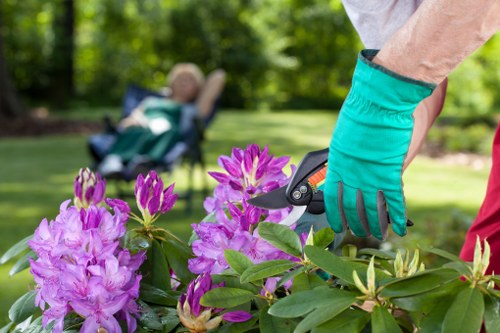
A well-managed project normally starts with a site visit or a detailed discussion about the area you want improved. This helps identify access points, drainage issues, soil condition, sun and shade levels, and the overall look you want to achieve. From there, the work can be planned in a logical sequence so that the finished result is healthy, tidy, and built to last.
Depending on the scale of the job, the service may include clearing away old plants, turf, weeds, or debris; preparing the ground with improved soil or compost; reshaping beds and borders; laying turf; planting shrubs, perennials, or seasonal colour; and applying mulch or bark to protect the surface and keep the beds looking finished. Preparation matters because it gives new planting the best chance of establishing well.
Some customers want a full transformation, while others only need specific elements refreshed. For example, you might only want new lawn and a few planting beds, or you may only need the front boundary softened with shrubs and evergreens. The advantage of soft landscaping is its flexibility: work can be scaled to fit both the property and the budget.
Typical stages of the work
- Initial discussion about goals, style, and practical requirements
- Site assessment to review access, light levels, soil, and drainage
- Ground preparation including clearing, levelling, and soil improvement
- Installation of turf, planting, borders, or mulch
- Finishing touches to make the space neat, balanced, and ready for use
If your garden has existing features you would like to keep, such as mature shrubs, a tree, or a paved area, these can often be worked around rather than removed. A careful approach helps preserve what already works while improving the parts that need attention.
Planting choices that work well in urban Brixton gardens

The right plants can make a big difference to how successful a garden feels over time. In Brixton, many customers benefit from planting that is attractive but not too demanding, especially where space is limited or the garden is used regularly. A thoughtful planting scheme can add privacy, year-round interest, movement, scent, and structure without needing constant attention.
Some gardens suit a modern, simple look with structural evergreens, ornamental grasses, and a few seasonal highlights. Others feel better with a more traditional border packed with flowering plants, climbers, and shrubs that change through the year. The key is to choose plants that match the light, soil, and maintenance level of the space. Urban conditions can be tough, so it pays to choose varieties that are resilient as well as attractive.
For shady spaces, it may be better to focus on plants that cope with reduced light and variable moisture. For sunny terraces and south-facing gardens, drought-tolerant planting can reduce the need for constant watering. In exposed or high-traffic areas, sturdy evergreen planting may be the most practical choice. If you are not sure what will work best, a local landscaping team can help match plant selection to the conditions on site.
Planting ideas often requested by Brixton customers
- Evergreen borders for year-round structure
- Pollinator-friendly planting with seasonal colour
- Low-maintenance shrubs for busy households
- Privacy planting for overlooked gardens
- Container planting for patios, courtyards, and entrances
- Small trees or specimen plants where space allows
Healthy planting is not just about the plants themselves; it is also about spacing, soil quality, watering needs, and maintenance after installation. A carefully planned scheme tends to look better for longer and gives you a more rewarding garden experience.
Why customers choose a local soft landscaping team
Working with a local company has practical benefits that matter on real jobs. A team familiar with Brixton and the surrounding South London area is more likely to understand narrow streets, limited unloading space, shared entrances, and the mix of property styles found here. That can save time, reduce disruption, and help the project run more smoothly from start to finish.
Local teams are also used to the rhythm of the area. They understand that some residents need quieter scheduling, that some commercial sites need work arranged around opening hours, and that access may need to be coordinated with neighbours or building managers. In a busy area like Brixton, these details are often just as important as the planting itself.
Choosing a nearby service can also make it easier to arrange a follow-up visit if needed, whether that means checking on new planting, making adjustments after establishment, or planning a further phase of improvement later on. If you value a practical, responsive approach, a local team is often the better fit. Request a free quote if you want to compare options for your property.
Benefits of a local approach
- Better understanding of local property layouts and access issues
- More suitable plant choices for urban conditions
- Easier coordination around parking and unloading
- Useful for both one-off projects and phased improvements
- Support for homes, landlords, and business premises alike
How to prepare for your soft landscaping work
A little preparation can make the project easier and help the work begin without delays. If you are booking soft landscaping in Brixton, it helps to think through how you use the space, what you want to keep, and what level of maintenance you are happy to take on afterwards. Clear goals make it much easier to recommend the right plants, layout, and materials.
You do not need to know every detail before getting in touch. Many customers just know that the garden looks tired, the lawn is patchy, or the front of the property needs a smarter finish. That is enough to start a conversation. From there, the practical side can be worked out: access, timing, removals, and any features you would like preserved.
Before work starts, it can be helpful to remove personal items such as furniture, toys, bins, or pots from the immediate working area. If there are pets, consider how they will be kept safe and away from the site. For shared properties or managed buildings, make sure any necessary access arrangements are known in advance.
Simple preparation checklist
- Clear the area of movable furniture and loose items
- Identify any plants, trees, or features you want to keep
- Let the team know about narrow access, stairs, or shared entrances
- Discuss whether old soil, turf, or plants need removing
- Consider how much maintenance you want after completion
- Think about whether the space should be child-friendly, pet-friendly, or visitor-friendly
A clear brief at the start can save time later and help the finished garden suit the way you live or work.
Pricing factors and what can affect the cost
Customers often want to understand what influences the cost of soft landscaping before they commit to a project. While exact prices vary from one site to another, the main factors are usually straightforward. The size of the area, the amount of ground preparation needed, access to the site, the quantity and type of materials, and the complexity of the planting scheme all play a role.
In Brixton, access can be a major factor. If materials must be carried through a property, up stairs, or through a narrow passage, the work may take more time than on a site with easy vehicular access. Similarly, if the soil needs substantial improvement, or if the area is overgrown and needs clearing first, there may be more labour involved before planting can begin.
Plant choices also affect the work required. Mature shrubs, larger specimen plants, or layered planting schemes will usually require more planning and handling than a simple turfing job. That said, soft landscaping is often a flexible way to improve an area because the scope can be adjusted. It is often possible to phase the work, starting with the most urgent improvements and adding more later if needed.
Factors commonly discussed during quoting
- Garden or frontage size
- Ground condition and amount of clearing needed
- Access and parking limitations
- Type and quantity of plants, turf, soil, or mulch
- Whether existing features must be retained or removed
- Level of finish and maintenance requirements
If you are comparing services, ask what is included in the quotation so you can understand the full scope. A clear breakdown makes it easier to choose the right option for your property and avoid surprises later.
Residential soft landscaping in Brixton
For homeowners, landlords, and tenants, soft landscaping can make a garden feel more usable almost immediately. A tired lawn can be replaced, boundaries can be softened, and overgrown or empty beds can be turned into an attractive part of the property again. This is especially useful for rental homes where a smart outdoor space can help the property feel better maintained, or for family homes where the garden needs to be practical as well as pleasant.
Brixton’s mix of terraces, maisonettes, flats with communal gardens, and converted properties means there is no one-size-fits-all solution. Some gardens need privacy from neighbouring windows. Some need a more open layout so children can play. Others simply need a cleaner, greener appearance that feels easier to manage through the seasons. Soft landscaping gives you options without requiring a full structural redesign.
Residential customers often ask for a balance between looks and maintenance. That might mean choosing evergreen plants, using mulch to reduce weeding, or creating a layout that is attractive but easy to access for regular care. If that sounds like what you need, book your service now and ask about a solution that fits your home.
Popular residential improvements
- Replacing worn lawn with fresh turf
- Redesigning narrow borders to improve flow
- Adding plants for privacy and softness
- Creating low-maintenance front garden planting
- Refreshing neglected communal or shared areas
Commercial soft landscaping for businesses and managed premises
Commercial properties in and around Brixton benefit from outdoor areas that are tidy, welcoming, and easy to maintain. A neat entrance or frontage can support the appearance of a business without adding unnecessary work for staff or property managers. This is relevant for retail units, cafés, office buildings, healthcare settings, education sites, and residential developments.
The needs of commercial customers often differ from residential ones. Appearance is important, but so is reliability. Plants should be chosen for durability, and the layout should allow for regular cleaning, foot traffic, and simple ongoing care. In busy locations, it is often best to avoid overcomplicated planting and instead focus on strong, resilient choices that stay presentable.
Local commercial landscaping support is especially useful where access is limited or work has to be carried out at specific times. A Brixton-based team is more likely to understand how to plan around pedestrian flow, deliveries, and the practical realities of busy streets and shared entrances.
Commercial outcomes customers often want
- A better first impression for visitors and customers
- Cleaner, more presentable frontages
- Planting that is robust and easy to maintain
- Improved boundary softening around hard surfaces
- Work completed with minimal disruption to operations
Whether the priority is image, practicality, or both, soft landscaping can help create a better outdoor setting that works alongside the building rather than competing with it.
Areas covered
Soft landscaping services are available throughout Brixton and nearby parts of South London, including surrounding residential streets, commercial districts, and mixed-use areas. Customers commonly enquire from:
- Brixton Hill
- Brixton Village and nearby shopping streets
- Herne Hill
- Stockwell
- Clapham
- Kennington
- Oval
- Tulse Hill
- Streatham
- Nearby South London neighbourhoods
If your property sits just outside these areas, it may still be possible to help depending on the nature of the work and access requirements. For the best next step, get in touch with your project details and ask for a tailored quotation.
FAQs about soft landscaping in Brixton
How long does a soft landscaping job take?
It depends on the size of the area, the amount of preparation needed, and the complexity of the planting or turfing. A small refresh may be completed quickly, while a larger redesign can take more time. Site access and weather conditions can also affect timing.
Can soft landscaping help with a neglected garden?
Yes. Neglected gardens often start with clearance, soil improvement, and a simple new structure before planting is added. In many cases, it is best to restore the ground first and then build a better layout on top.
Do I need to know exactly what plants I want?
No. Many customers only have a general idea of the look they want. You can discuss whether you prefer low-maintenance, colourful, evergreen, shaded, or wildlife-friendly planting, and the scheme can be shaped from there.
Is turfing part of soft landscaping?
Yes. Turfing is one of the most common soft landscaping services. It is often used to replace patchy or uneven grass and create a cleaner, more usable lawn area.
Can you work with small Brixton gardens?
Absolutely. Small gardens, courtyards, and front plots often benefit most from careful soft landscaping because every part of the space needs to work hard. Good design can make compact areas feel brighter, greener, and more organised.
What if access is difficult?
Access issues are very common in Brixton and surrounding areas. They can usually be worked around with careful planning, though they should be discussed early so the project can be scheduled properly.
Ready to improve your outdoor space?
If you are looking at a garden, yard, frontage, or commercial outdoor area and thinking it needs a better finish, soft landscaping may be the most practical place to start. It can add greenery, improve structure, create a more welcoming feel, and make the space easier to care for over time. For many Brixton properties, that means finding a balance between beauty and durability.
Soft landscaping in Brixton is about making the most of urban outdoor spaces with sensible planning, suitable planting, and attention to local conditions. Whether you need a simple refresh or a more involved transformation, a local team can help you move from ideas to a finished result that fits your property.
Contact us today to discuss your plans, request a free quote, or book your service now. If you want your outdoor space to feel more inviting, better organised, and ready for everyday use, now is a good time to start.